
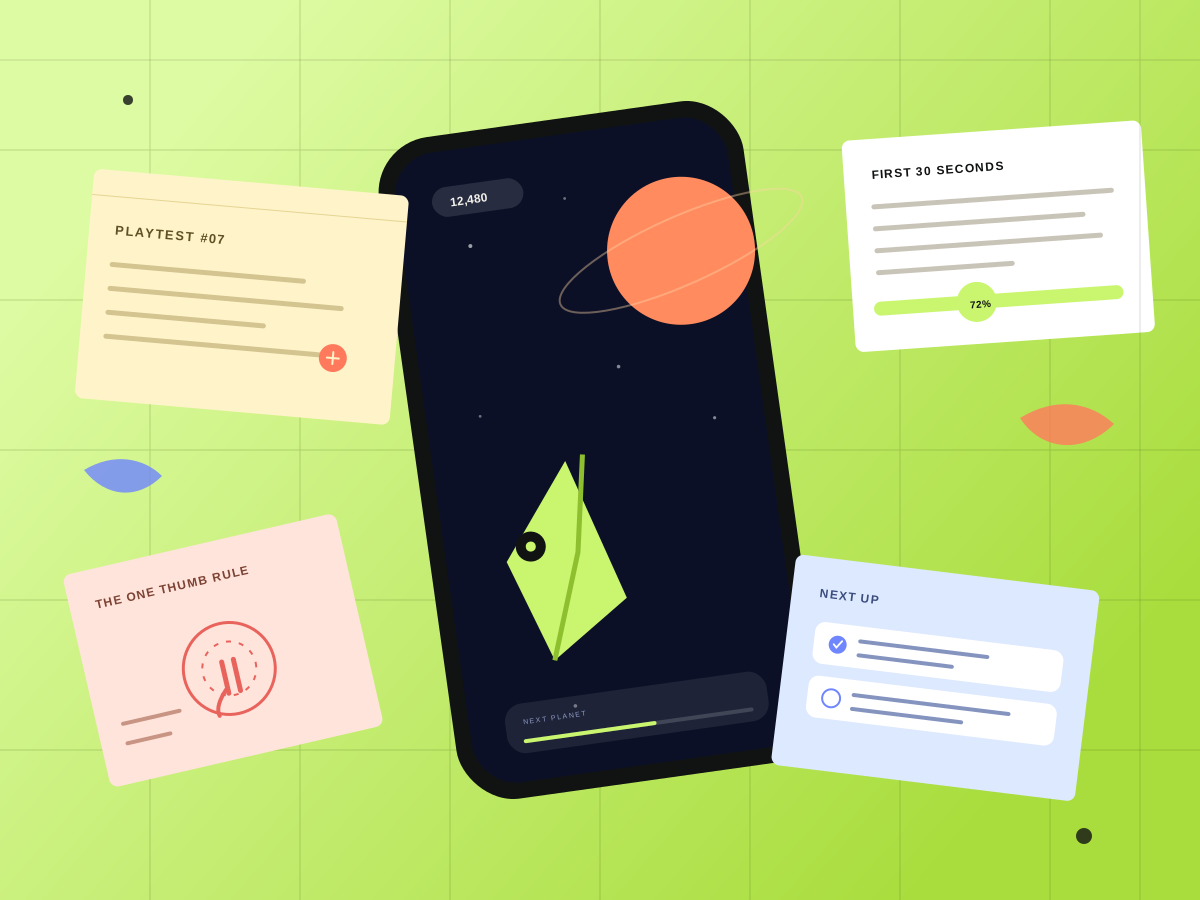
There is a specific sound a room makes when a game clicks. It is not applause. It is quieter than that: a small exhale, a thumb moving again before the brain has finished deciding, a second session started while the first is still warm.
We spend a disproportionate amount of time chasing that moment. Most of it happens in the first thirty seconds.
Since founding the studio this year, we have been building one-thumb prototypes: experiences you can play with a single thumb, in short bursts, on a train or in a queue or on the sofa while something else is happening. The constraint sounds simple. It is not. A single thumb has to carry the entire conversation between player and game.
The welcome screen is not a formality
In our early prototypes, the first screen was a logo, a loading bar and a button that said “Tap to start.” It felt clean. It tested badly. Not because players couldn't find the button, but because they had no reason to care by the time they found it.
We started treating the first screen as the first level. It should teach the core verb, establish the tone and give the player something to do before they have time to wonder whether they want to do it. In our first prototype, the screen is already moving when it fades in. Your first tap is not permission to play. It is play.
This is a small change with a large effect. Players who are moving within two seconds are measurably more likely to start a second run. The welcome screen stopped being a gate and became a doorway.
If the first interaction needs a paragraph of explanation, the interaction is not finished yet.
Design for the thumb, not the screen
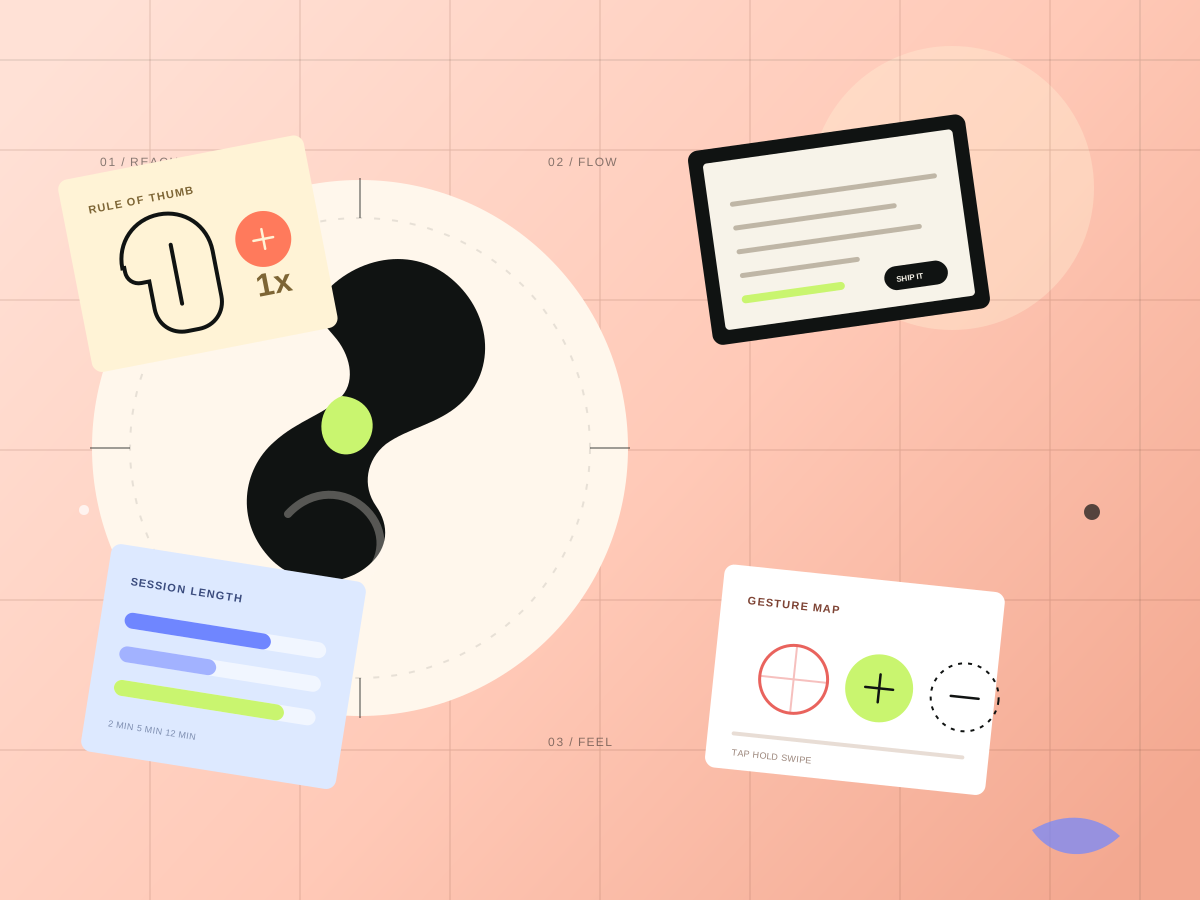
Most mobile games are designed on a desktop and then squeezed into a phone. The result is a layout that looks correct and feels wrong. The thumb is not a mouse. It has a reach, a blind spot and a tendency to rest in the lower corner of the device.
We build every prototype on the smallest phone we support, held in one hand, with the other hand behind our back. It is an absurd-looking process that has saved us from a dozen bad decisions. Buttons that require a stretch. Menus that sit under the palm. Gestures that fight the natural arc of the thumb.
Make the first failure kind
Players will fail early. That is useful. Failure is how a game teaches. But the first failure sets the emotional temperature for everything that follows. If it feels like a scolding, players leave. If it feels like a nudge, they try again.
We use three rules for early failure:
- Show the near miss before the result. Let the player see how close they were.
- Never take more than two seconds to return control. Restart speed is a form of respect.
- Make the next attempt feel different, not simply repeated.
In one early prototype, a failed attempt doesn't reset the board. It leaves a small mark on the world and a new path through it. The loss becomes part of the story rather than a pause in it.
One verb, many sentences
The best one-thumb games are not simple. They are legible. A single input can produce an enormous range of outcomes if the game is designed around relationships rather than buttons.
Hold, release, drag, tap, time. Each of those is a word. The game's job is to write sentences with them. In one of our control prototypes, the same tap is a jump, a strike and a shield depending on what the world is doing around you. The player learns the grammar in seconds and spends hours discovering what it can say.
This is why we prototype with one input for as long as possible. Adding a second button is easy. Removing one after players have learned it is much harder.
Test the silence, too
One-thumb games are often played with the sound off. That is not a failure of the audio design; it is a design constraint we should embrace earlier. If the game only makes sense with sound, it is not finished.
We run a silent playtest for every build. No music, no effects, no haptics. If the core loop still reads, the visual language is doing its job. Then we add sound back as amplification rather than instruction.
Leave room for the player
The final lesson is the hardest to design for: not every second needs to be filled. A one-thumb game can breathe. It can let the player look at the horizon, choose a slower route or simply stop tapping for a moment.
Some of our favourite playtest notes are about nothing happening. A player putting the phone down during a sunset. A player waiting to see what the garden would do next. Those pauses are not dead air. They are the game trusting the player enough to leave space.
Thirty seconds is enough time to make someone curious. The rest of the game is about making that curiosity feel worth keeping.